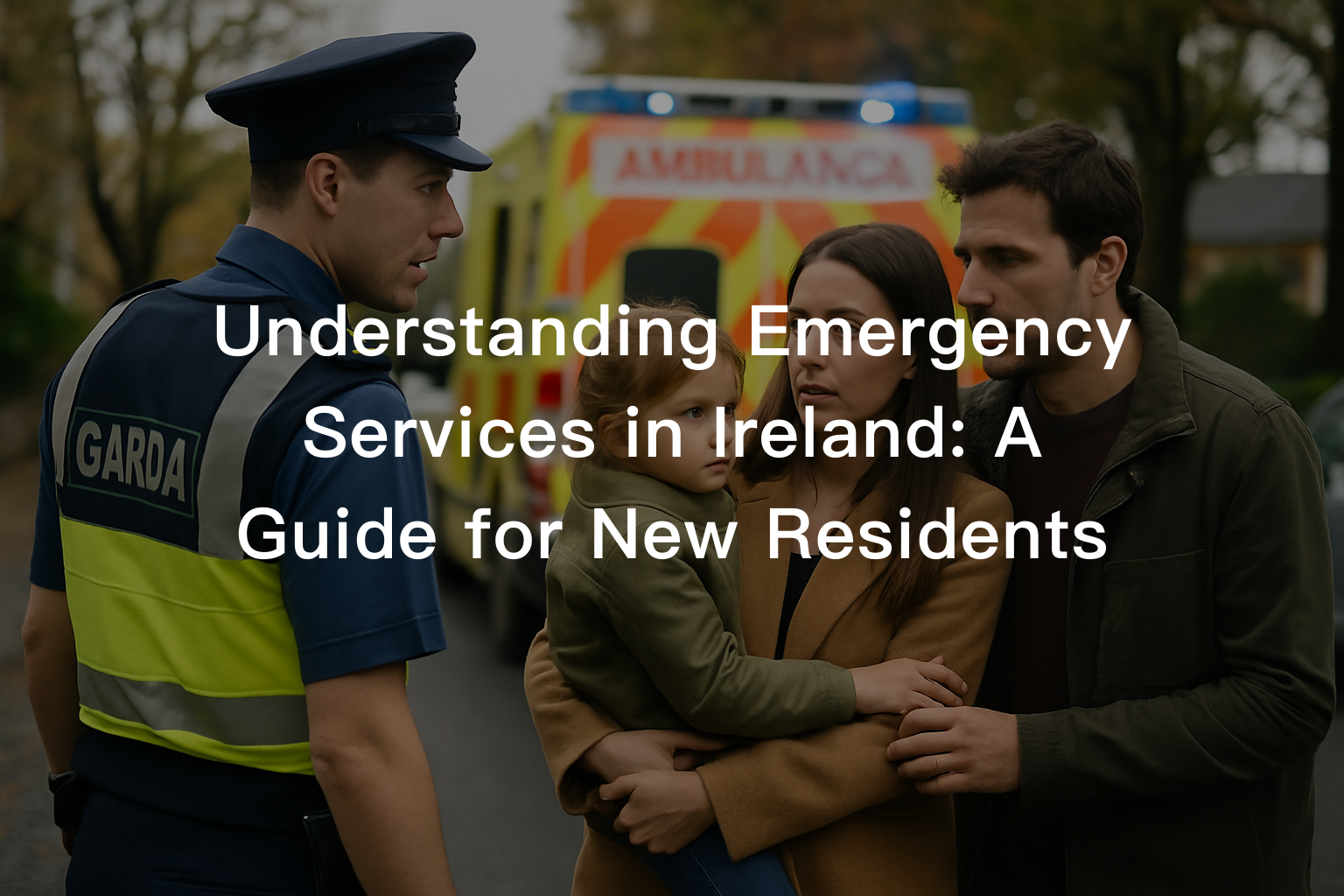
An essential guide for new residents on accessing Ireland's emergency services, including practical tips for international families.
Introduction to Ireland's Emergency Services
Moving to a new country involves acclimatising to various aspects of daily life, and understanding the local emergency services is crucial for the safety of your family. Ireland's emergency services are comprehensive and designed to cater to the needs of its residents and visitors. The primary emergency services include An Garda Síochána (the police), the National Ambulance Service, and the Irish Fire Service. These entities work together to ensure public safety and respond to emergencies promptly.
As a new resident, it's important to familiarise yourself with the emergency contact number. In Ireland, the number to dial in a crisis is 112 or 999. Both numbers are free to call and can be used to reach any of the emergency services. The operators are trained to guide you through the situation and ensure that help is dispatched immediately.
Understanding the role of each service and how they interact can provide peace of mind and ensure you know exactly what to do should an emergency arise. This guide will help you navigate the Irish emergency services landscape, offering practical insights and advice for international families, particularly those from China.
An Garda Síochána: Maintaining Law and Order
An Garda Síochána, often referred to simply as 'the Gardaí', serves as Ireland's national police service. The Gardaí are responsible for maintaining law and order, preventing crime, and providing various public services. They are a community-focused police force, which means you can expect a high level of engagement and visibility in your locality. In urban centres such as Dublin, Cork, and Galway, the presence of the Gardaí is especially prominent.
New residents might be particularly interested in the community policing initiatives that the Gardaí offer. These programmes are designed to build relationships between the police and the local community, often including multicultural outreach efforts. For example, Gardaí in Dublin have specialised units dedicated to engaging with international communities, providing advice and support to new residents.
When it comes to dealing with minor offences or non-emergency situations, you can visit your local Garda station for advice or to report an incident. The Gardaí also run a text alert service in many areas, which is a useful tool for staying informed about local safety issues. Signing up for this service can be a smart move for families wanting to feel more connected to the community's safety efforts.
National Ambulance Service: Immediate Medical Attention
The National Ambulance Service (NAS) is Ireland's primary provider of pre-hospital emergency care and ambulance services. Available 24/7, this service is crucial for providing immediate medical attention in emergencies. The NAS operates a fleet of ambulances, rapid response vehicles, and helicopters to ensure timely interventions. For new residents, understanding how to interact with the NAS can be lifesaving.
When dialling 112 or 999 for an ambulance, it's important to provide clear and concise information about the nature of the medical emergency, your location, and any immediate concerns about the patient's condition. The dispatcher will ask questions to assess the situation and prioritise the response accordingly.
While the NAS provides excellent emergency care, new residents should also be aware of Ireland's healthcare system to ensure comprehensive medical support. Having private health insurance can expedite access to certain services and facilities, although the NAS services are provided free of charge at the point of delivery. Many international families opt for health plans from providers like VHI or Laya Healthcare, which offer a range of services tailored to expatriates.
Irish Fire Service: Responding to Fires and More
The Irish Fire Service is another critical component of Ireland's emergency response framework. Comprising multiple local fire brigades across the country, the service is responsible for responding to fires, road traffic accidents, chemical spills, and more. Stations are strategically located to cover both urban and rural areas effectively.
Fire safety is an area where new residents should be particularly proactive. Familiarising yourself with basic fire safety measures and ensuring your home is equipped with smoke alarms and fire extinguishers can significantly reduce risks. The local fire brigade often conducts fire safety inspections and public education sessions, which are valuable resources for residents.
Families moving into rental accommodations should ensure that their landlords have provided up-to-date fire safety measures. This includes having a fire escape plan and functional alarms. In cities like Dublin and Cork, the local councils work closely with the fire service to ensure compliance with safety regulations, making it easier for residents to know their living arrangements are secure.
Practical Tips for Engaging with Emergency Services
For families new to Ireland, navigating the emergency services can seem daunting at first. However, several practical steps can make this process smoother and more efficient. First, ensure that every family member understands the importance of the emergency contact numbers and when to use them.
- Keep a list of local emergency contacts, including your nearest Garda station, hospital, and fire brigade, visible in your home.
- Participate in community safety events or workshops offered by local authorities to better understand local safety protocols.
- Consider attending a first aid course, which can be particularly beneficial for parents with young children.
Understanding the specific needs of your family is crucial. For instance, if you have elderly relatives or family members with special requirements, reach out to local support networks. Many community centres offer resources and information tailored to diverse needs, ensuring that all residents feel supported and secure.
Emergency Services for Non-English Speakers
Language can be a significant barrier for Chinese families and other non-English speakers when accessing emergency services. However, Ireland's emergency services are increasingly equipped to handle language barriers. Dispatchers are trained to use translation services, ensuring that critical information is not lost in translation during emergencies.
For non-emergency interactions, such as inquiries at a Garda station or fire safety checks, feel free to bring a translator or use translation apps. Many public services, including hospitals, offer translation services to assist non-English speaking residents in accessing the care and support they need.
Community organisations like the Irish Chinese Information Centre in Dublin provide additional support, offering advice and translation services to help new residents overcome language challenges. Building a network within your community can also provide informal support, as many residents are eager to help newcomers settle in.
Conclusion: Peace of Mind Through Preparedness
While navigating a new country's emergency services can seem complex, understanding how Ireland's systems work will provide you with the confidence and peace of mind to ensure your family's safety. By familiarising yourself with the roles of various services, engaging with community resources, and preparing for potential language barriers, you can navigate emergencies smoothly.
Remember, the focus is on preparedness and awareness. Having key contacts readily accessible, participating in local safety initiatives, and understanding your healthcare options are steps that will safeguard your family.
Peterson Family Office is here to guide you through these processes, ensuring you are well-informed and prepared for any situation. With the right information and support, your transition into life in Ireland can be both safe and rewarding.
About Peterson Family Office
Peterson Family Office Limited was established in Dublin in 2022, serving high-net-worth international families with a focus on education pathway planning, tax advisory, and long-term family strategy. Our philosophy — Professional · Disciplined · Long-term Commitment — guides every aspect of our work. We combine deep knowledge of the Irish and European landscape with a genuine understanding of the needs of families relocating from Asia and beyond.
Our three core service areas — Education Pathway Planning, the 1+1 Dual Mentorship System, and Family Office Services — work together to support families at every stage of their journey in Ireland. To learn more about how we can help your family, visit About Peterson Family Office.
Related Articles
Seasonal Wellness Tips for Families in Ireland
Discover essential wellness tips for families in Ireland to stay healthy and happy throughout the year.
Family Cultural Exchange Opportunities in Ireland
Explore family-oriented cultural exchange opportunities in Ireland for better integration and understanding.
Integrating Chinese Families into Irish Communities: Practical Tips
Discover practical tips for Chinese families to seamlessly integrate into Irish communities using local resources and cultural events.